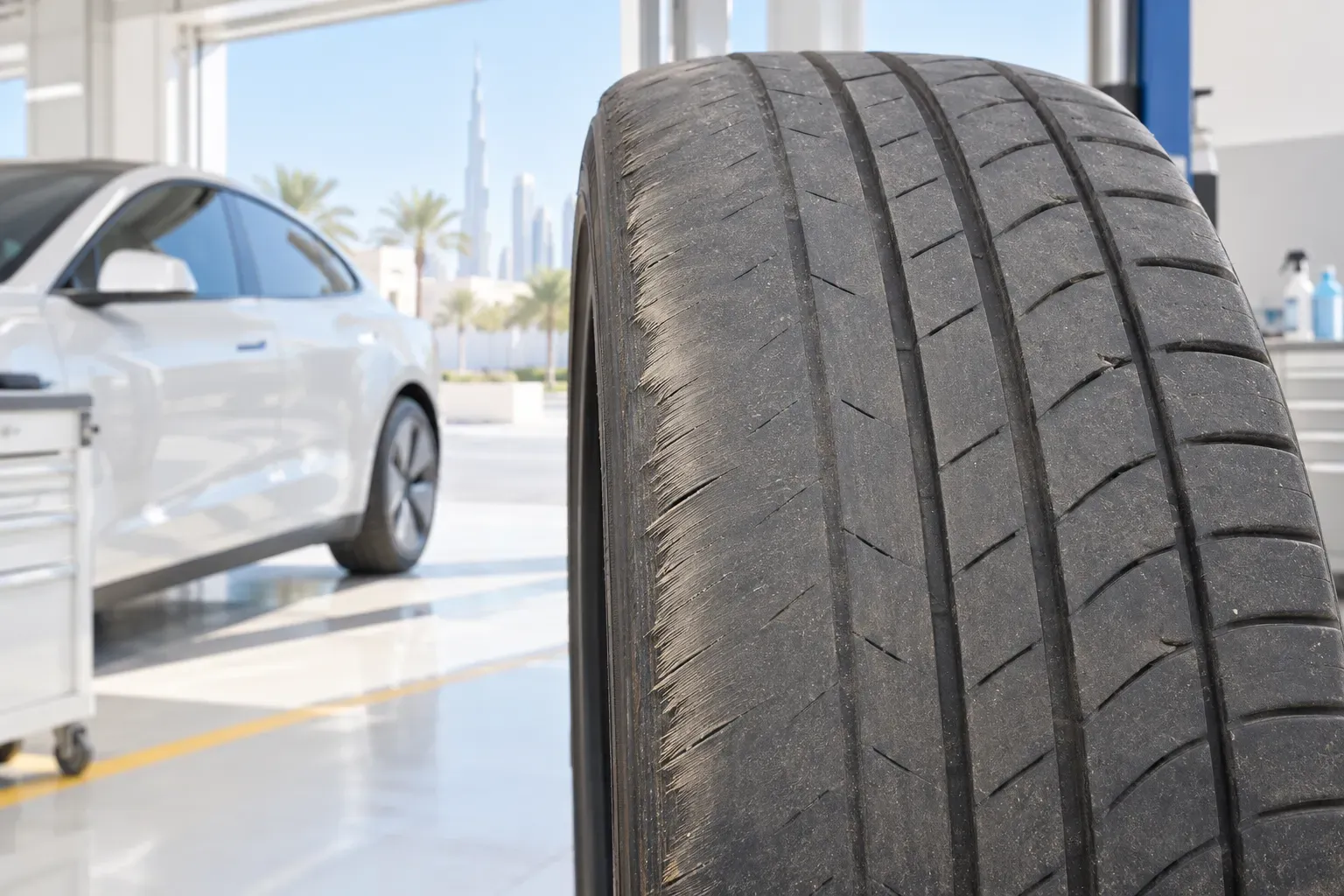
Reading the wear pattern
The way a tyre wears tells a technician where to look first.
- Inner or outer edge: camber or toe
- Feathered ribs: toe
- Patchy cupping: worn suspension or imbalance
- Both edges: low pressure, not alignment
- Centre only: over-inflation
What knocks wheels out of alignment
A single hard hit on a kerb, speed bump or pothole can shift the angles. Worn bushes and suspension parts cause a gradual change. Lowering springs and fitting different wheels can also move the settings away from specification.
Why EVs show it sooner
Heavy batteries and instant torque put more load through the tyres, so a small alignment error can wear the inner edge quickly. That inner edge is hard to see when standing beside the car, so look at it during each rotation or ask a technician to check it.
Alignment and balancing are different
Alignment sets the angle of the wheels. Balancing evens out weight around the wheel and fixes speed-related vibration. If the steering shakes at highway speed, start with balancing. If the tyre wears on one side or the car pulls, start with alignment.
Symptoms to look for
- Wear on the inner or outer edge
- Steering wheel off-centre when driving straight
- Car drifts to one side
- Feathered tread that feels saw-toothed
- Squealing on gentle corners
The fix
Book a wheel alignment, inspect the suspension, and replace tyres worn near the limit.