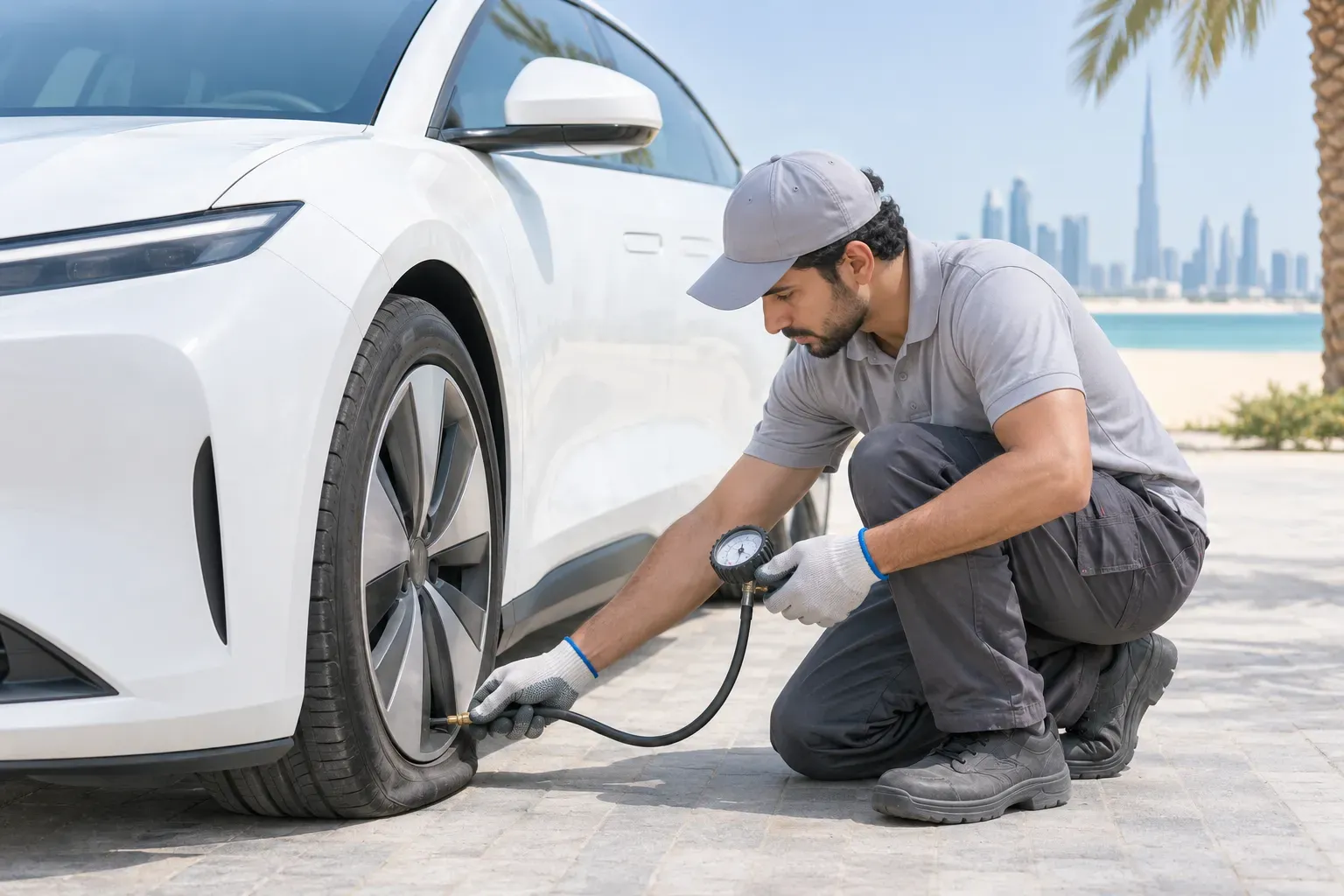
Why low pressure is so damaging
Each wheel turn bends the sidewall. With too little air, it bends further and generates more heat. Over time that heat can weaken the bond between the rubber and internal layers, which is a common route to a tread separation or blowout.
How to check it properly
Measure in the morning, or after the car has been parked for a few hours. Driving warms the air and gives a higher reading.
- Find the correct value on the driver door placard
- Use a reliable digital gauge
- Check all tyres, plus the spare if fitted
- Repeat at least once a month
Do not rely on looks
Modern tyres can look almost normal while being well below the correct pressure. TPMS helps, but many systems only warn after a significant drop. A monthly gauge check catches a slow loss sooner.
Why EV drivers should pay extra attention
EVs carry heavy batteries, so their tyres work harder at every corner and stop. Low pressure increases rolling resistance, which shows up directly as lost range. Some EVs use extra-load tyres with higher pressure specifications, so always follow the placard for your exact model.
Symptoms to look for
- Wear along both tread edges
- Heavy or vague steering
- TPMS warning light
- Lower EV range or higher fuel use
- The tyre looks visibly squashed
The fix
Set cold pressure to the door placard value, then check for a slow leak if it drops again.