Wheel alignment adjusts the angles of the wheels so they point correctly, while wheel balancing evens out the weight around each wheel and tyre. A car pulling to one side usually needs alignment. Vibration at speed usually points to balancing. Many cars benefit from both when new tyres are fitted.
Wheel alignment adjusts the angles of your wheels so they point the right way. Wheel balancing evens out the weight around each wheel and tyre so it spins smoothly. A car that pulls to one side usually needs alignment, while vibration at speed usually points to balancing. When you fit new tyres, you should always balance them and often check the alignment as well.
Drivers often use these two words as if they mean the same thing. They solve different problems, and paying for the wrong one leaves the fault in place. Here is how to tell which your car needs.
What is the difference between alignment and balancing?
| Wheel alignment | Wheel balancing | |
|---|---|---|
| What it corrects | Wheel angles | Weight distribution |
| Main symptom | Pulling, crooked steering wheel | Vibration at speed |
| Tyre wear pattern | One edge or feathered | Patchy or scalloped |
| How it is done | Adjusting suspension settings | Adding small weights to the rim |
| Equipment | Alignment machine | Balancing machine |
| When to do it | After impacts, new tyres, suspension work | Every new tyre or tyre removal |
| Our service | Wheel alignment | Wheel balancing |
What is wheel alignment?
Alignment makes sure your wheels sit at the angles the manufacturer intended, relative to the road and to each other. Three main angles are involved:
- Toe: whether the fronts of the tyres point slightly in or out when viewed from above. Incorrect toe is a major cause of fast tyre wear.
- Camber: how far the top of the tyre tilts in or out when viewed from the front. Too much tilt wears one edge.
- Caster: the steering axis angle, viewed from the side. It affects straight-line stability and how the steering returns to centre.
Knocks from kerbs, potholes and speed humps can shift these settings. On UAE roads, a hard hit on a speed bump or a parking kerb is the most common reason. Once alignment is off, tyres scrub along the road, leading to misalignment wear.
Signs your car needs alignment
- The car drifts or pulls to one side on a flat road.
- The steering wheel is off-centre when driving straight.
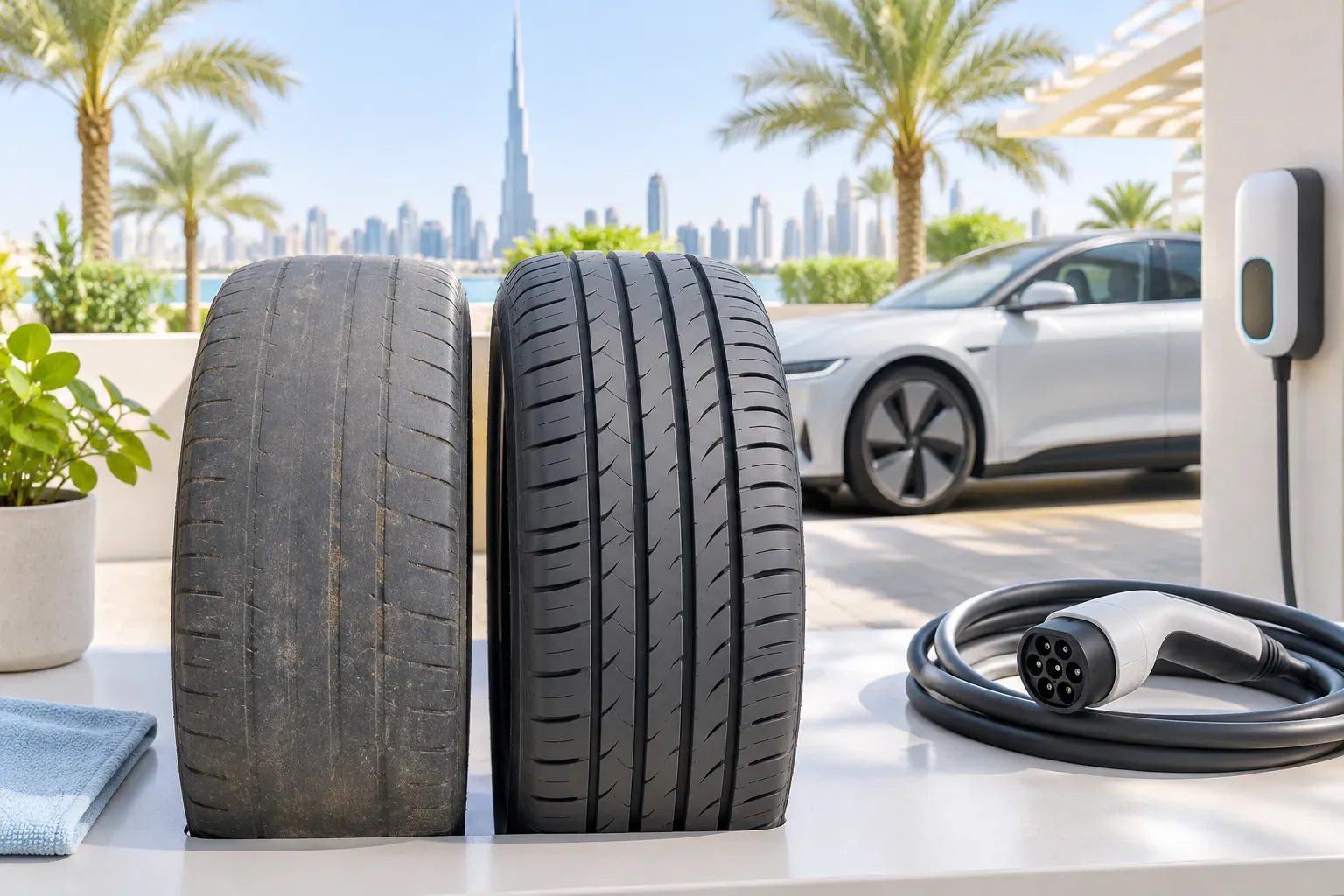
- One edge of the tyre is wearing faster than the other.
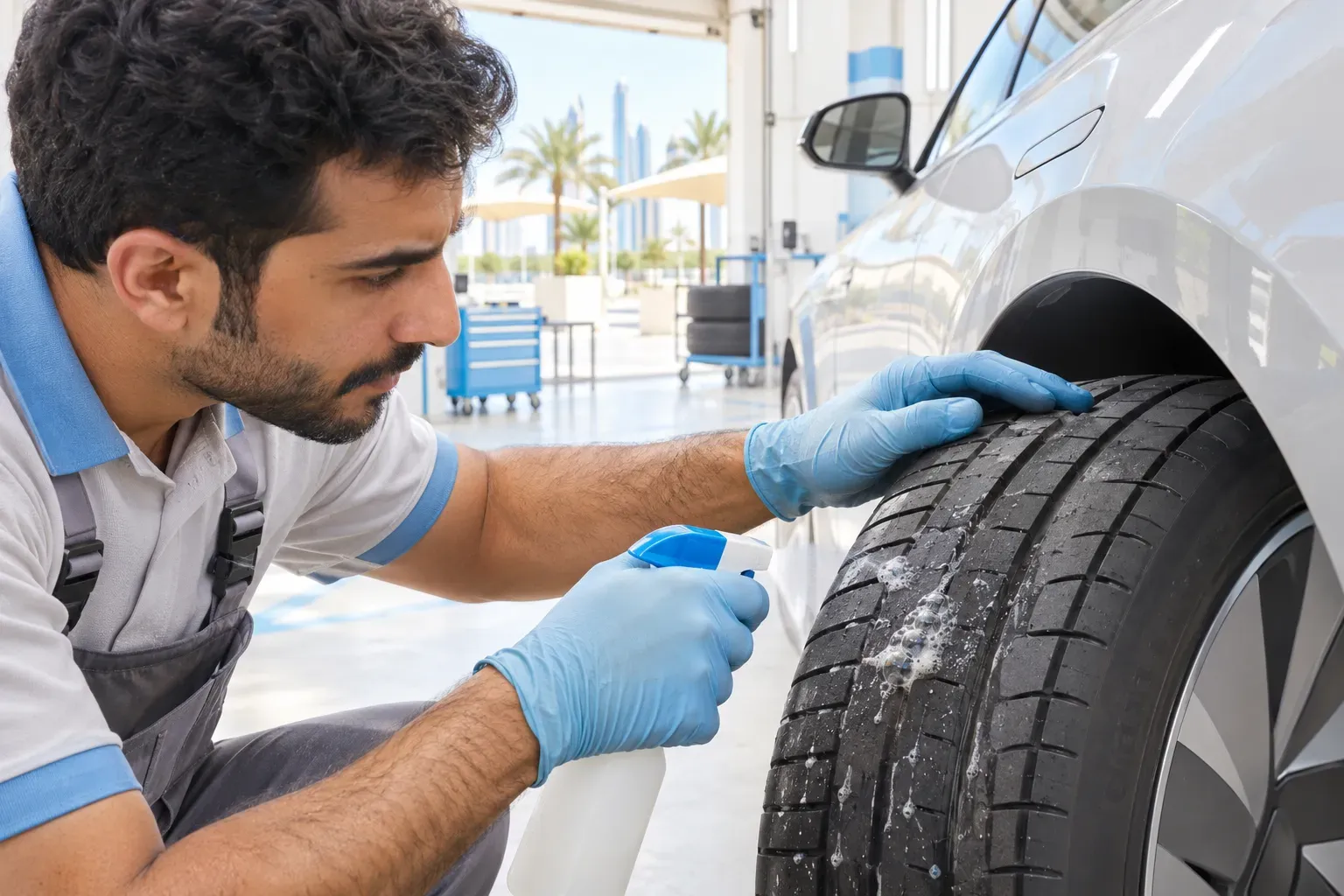
- The tread feels feathered when you run a hand across it.
- The tyres squeal during ordinary turns.
- You recently had a kerb impact or suspension work.
What is wheel balancing?
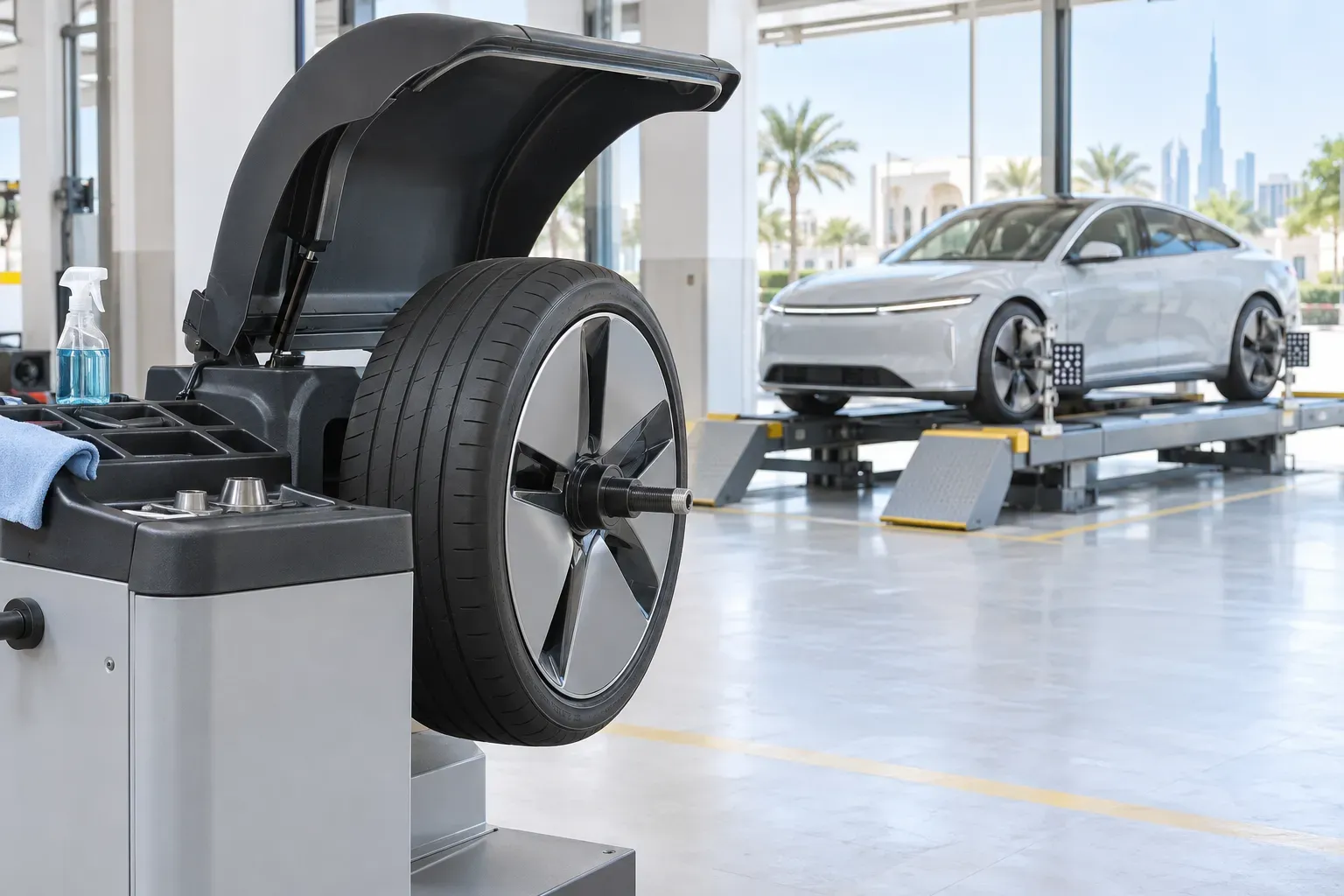
No wheel and tyre is perfectly even in weight. Small heavy spots that seem insignificant become a repeated shake when the wheel is spinning hundreds of times per minute. A balancing machine spins each wheel, finds these spots and shows where to put small counterweights on the rim.
Signs your wheels need balancing
- Steering wheel vibration at motorway speeds, often around 80 to 120 km/h.
- Vibration through the seat or floor, which often points to the rear wheels.
- Patchy or scalloped wear on the tread.
- A missing wheel weight, sometimes visible as a clean mark on the rim.
- A tyre that has recently been removed or repaired.
Vibration can have other causes, including a bent rim, a damaged tyre or worn suspension. If balancing does not fix it, have the car inspected. A sidewall bulge can also cause a shake and is a safety issue.
Do I need wheel alignment after a tyre change?
Not every time, but I usually suggest at least checking it. If your old tyres wore evenly and the car drives straight, the alignment may be fine. If the old set wore on one edge, fitting new tyres without correcting the cause means the new tyres will wear the same way. That is a poor way to spend money.
Balancing is different. Every new tyre should be balanced when it goes on. The same applies after a puncture repair, because the tyre has come off the rim. For more on repairs, read can a punctured tyre be repaired.
Which do I need? A quick diagnosis
- Car pulls left or right: check tyre pressures first, then alignment. Uneven under-inflation can cause the same symptom.
- Steering wheel crooked: alignment.
- Steering wheel shakes at speed: balancing of the front wheels.
- Seat vibrates at speed: balancing of the rear wheels.
- One tyre edge worn: alignment and possibly suspension.
- Patchy tread: balancing and a suspension inspection.
- New tyres feel rough: balancing, or a fitting issue.
Why does this matter more for EVs?
EVs are heavy, and they carry their weight low. A small alignment error can wear away an inner edge quickly, especially on the wide tyres used by many electric cars. And because the cabin is so quiet, even mild vibration feels obvious. I cover this further in why EV tyres wear faster.
Inner edge wear is easy to miss on an EV, so ask for it to be checked during a tyre rotation. Tesla owners can also read my Tesla tyre replacement guide. If you want it handled by people used to these cars, see our EV tyre service.
How often should you get them done?
Follow your owner’s manual for routine intervals. Beyond that, book a check when:
- You fit new tyres.
- You hit a kerb, pothole or speed hump hard.
- You have suspension or steering work done.
- You notice uneven tread wear.
- You feel a new pull or vibration.
- You return from a rough desert trip.
These small services protect a much larger investment. Good alignment and balance can help a set of tyres last much longer, as explained in how long tyres last in the UAE. Our tyre care guide has more tips.
Can you do one without the other?
Yes. They are separate jobs, so you can book only the one your symptoms point to. If your only problem is a shake at motorway speed, balancing may solve it without touching the alignment. If the steering wheel is crooked but the car runs smoothly, alignment alone may be enough.
Doing both makes the most sense when you fit new tyres or when you have several symptoms at once. It gives the new set a clean start and removes two common causes of early wear. Ask the workshop to show you the before and after alignment readings, because that printout is the clearest proof the job was done properly.
Book the right service
If you are unsure which your car needs, describe the symptom and we will point you in the right direction. Find us through our wheel alignment near me page, or visit our tyre shop in Dubai. Drivers in Abu Dhabi and Sharjah can contact us too. Starting prices are shown on each service page, and we will confirm the final price before starting work.