The correct tyre pressure in UAE summer is the figure on your driver's door placard, measured when the tyres are cold. Check early in the morning before driving. Do not use the maximum pressure on the sidewall, and do not let air out of hot tyres because they may end up under-inflated.
The correct tyre pressure in UAE summer is the figure printed on the placard inside your driver’s door frame, measured when the tyres are cold. Check it early in the morning before you drive. Do not use the maximum pressure moulded on the sidewall, and do not let air out of a tyre because it reads high after a hot drive.
Pressure is the single cheapest thing you can do for your tyres, and in my experience it is also the most neglected. Summer makes the mistakes more dangerous. Here is the right way to do it.
What should my tyre pressure be in summer?
Your car’s correct pressure was set by the manufacturer for its weight and tyres. It does not change with the season. You will usually find it in one of these places:
- The door placard on the driver’s side door frame.
- The owner’s manual.
- The fuel flap, on some cars.
- The vehicle’s settings screen, on many EVs.
Many placards show two figures, one for normal load and one for full load. If you are heading out with a full car and luggage, use the full-load figure.
The US regulator’s tyre safety guidance gives the same advice: use the vehicle’s label, keep a gauge in the car and check regularly.
Why is the sidewall number wrong?
The sidewall shows the maximum pressure the tyre can hold, and it says nothing about your car. Inflating to that number can leave you with a harsh ride, less grip and over-inflation wear down the middle of the tread. The placard figure is the one to follow.
Why does heat change tyre pressure?
Air expands as it warms. A common rule of thumb is that pressure changes by about 1 psi for every 10°F, or roughly 5.5°C. In the UAE, road and ambient temperatures swing a lot during the day, and driving adds heat of its own. So a tyre that reads correctly at dawn will read noticeably higher after a long run on a hot afternoon. That rise is normal, and the placard figure already allows for it.
This leads to the mistake I most want you to avoid.
Should you let air out of hot tyres?
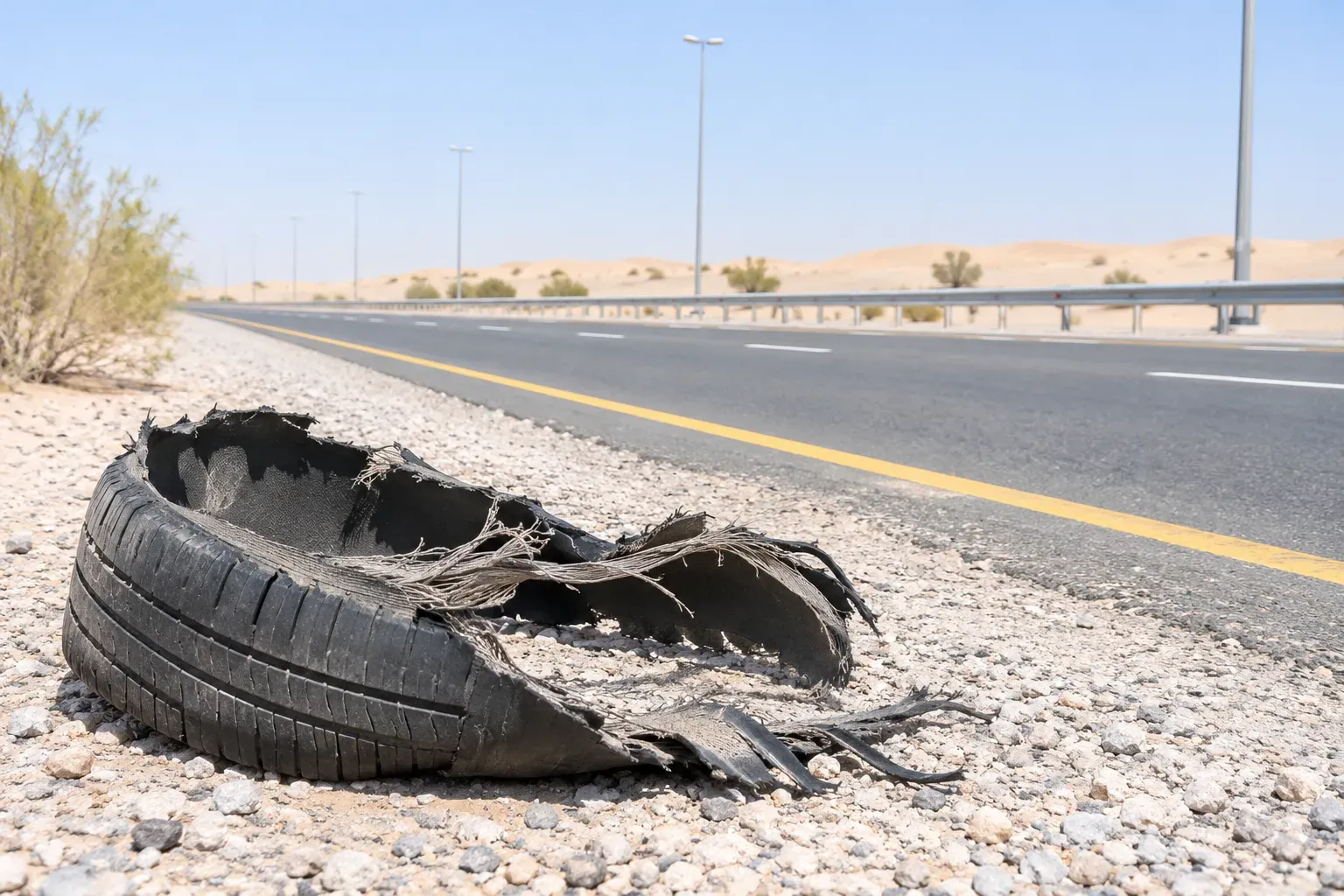
No. If you let air out of a hot tyre until it reads the placard figure, it will fall below the correct pressure as soon as it cools. An under-inflated tyre flexes more, builds extra heat and wears on both edges. That is how under-inflation leads to serious failures, which I cover in why tyres burst in the UAE.
If you must check when the tyres are warm, use the reading only to spot a tyre that is clearly lower than the others. Then recheck them all once they are cold.
How do you check tyre pressure correctly?
Here is the routine I recommend:
- Check before your first drive, ideally early in the morning. Tyres are generally considered cold after the car has been parked for at least three hours.
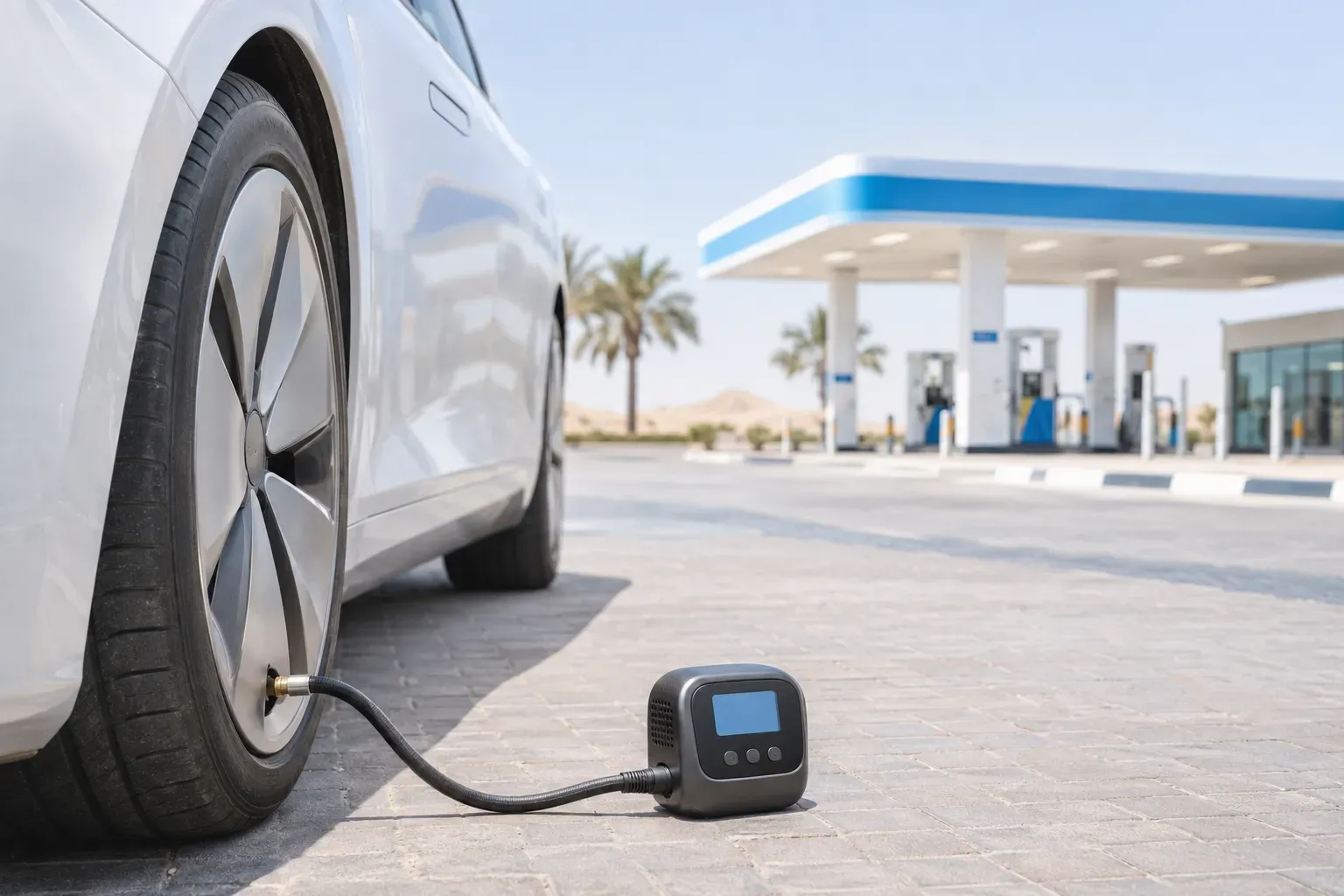
- Use a good gauge. Forecourt gauges can be inaccurate, so a small digital gauge in the glovebox is a good investment.
- Remove the valve cap and press the gauge firmly onto the valve.
- Compare with the placard, noting that front and rear may be different.
- Add air if needed, in short bursts, and recheck.
- Check all four tyres, plus the spare if you carry one.
- Refit the valve caps. They keep dust and sand out of the valve.
What happens if tyre pressure is wrong?
| Pressure problem | What you may notice | Long-term effect |
|---|---|---|
| Too low | Soft steering, poor range or fuel use | Both edges wear, heat builds, risk of failure |
| Too high | Harsh ride, less grip | Centre of tread wears out early |
| Uneven left to right | Car pulls to one side | Uneven wear and poor stability |
| Slow loss in one tyre | Repeated warning light | Possible puncture or valve leak |
If one tyre keeps losing air, you may have a slow leak from a nail or screw. Our puncture repair service can find it. If you are not sure the damage can be fixed, read can a punctured tyre be repaired.
What should you do if the TPMS light comes on?
A tyre pressure warning means at least one tyre is significantly low. NHTSA advises you to inspect and check your tyres as soon as possible, and also notes that TPMS only warns when a tyre is already well below target. So do not rely on it instead of a monthly check.
If the warning stays on after you correct the pressure, a sensor may have failed. Our TPMS service can test and replace it.
Do EVs need different tyre pressure?
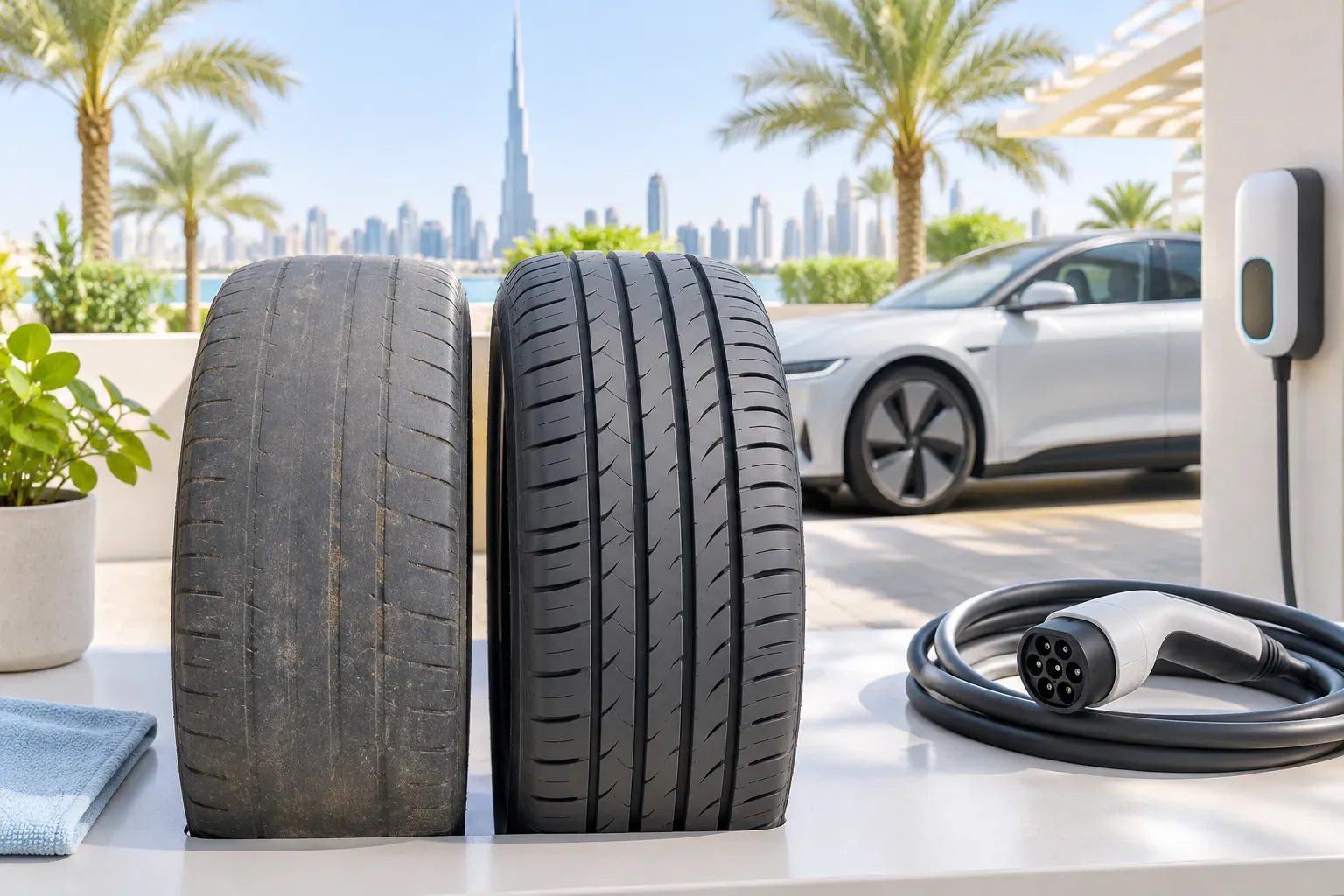
EVs use whatever figure the manufacturer gives them, which is often higher than a similar-sized petrol car because of the extra weight. Correct pressure is especially valuable in an EV, because low pressure directly hurts your range and speeds up wear. Most EVs show live tyre pressures on the screen, but it is still worth confirming with a gauge occasionally. For more, read why EV tyres wear faster and visit our EV tyre service.
What about driving on sand?
Drivers heading into the desert often lower their tyre pressure for grip. That can be right for soft sand, using the amount suited to the vehicle and tyre, but it must go back up to the road figure before you return to tarmac at speed. Driving fast on deflated tyres in the heat is extremely risky. If you do this often, an all-terrain tyre is worth considering, and carrying a compressor should be a must.
A simple summer tyre routine
- Check pressure monthly, and every two weeks during peak summer.
- Check before every long drive, especially trips to Oman or across the emirates.
- Inspect tread and sidewalls at the same time.
- Keep your spare tyre inflated too.
- Park in the shade when you can.
- Book a wheel alignment if you notice one-sided wear.
For the full list, see our tyre care tips. If you are thinking of changing tyres before summer, my guide to the best tyres for UAE heat can help you choose.
Does nitrogen stop pressure changes in the heat?
No. Nitrogen may reduce slow pressure loss, but a nitrogen-filled tyre still changes pressure with temperature and still needs regular checks. Use the same placard figure and the same cold-check routine. If you have nitrogen and need to top up, ordinary air is fine in an emergency.
Need a quick pressure and tyre check?
If you are unsure about the condition of your tyres, have them looked at before a long summer journey. We can inspect them at our tyre shop in Dubai or come to you with our mobile tyre service. We also help drivers in Abu Dhabi and Sharjah.